
Geopark History and Territory
Geographic Location and General Information
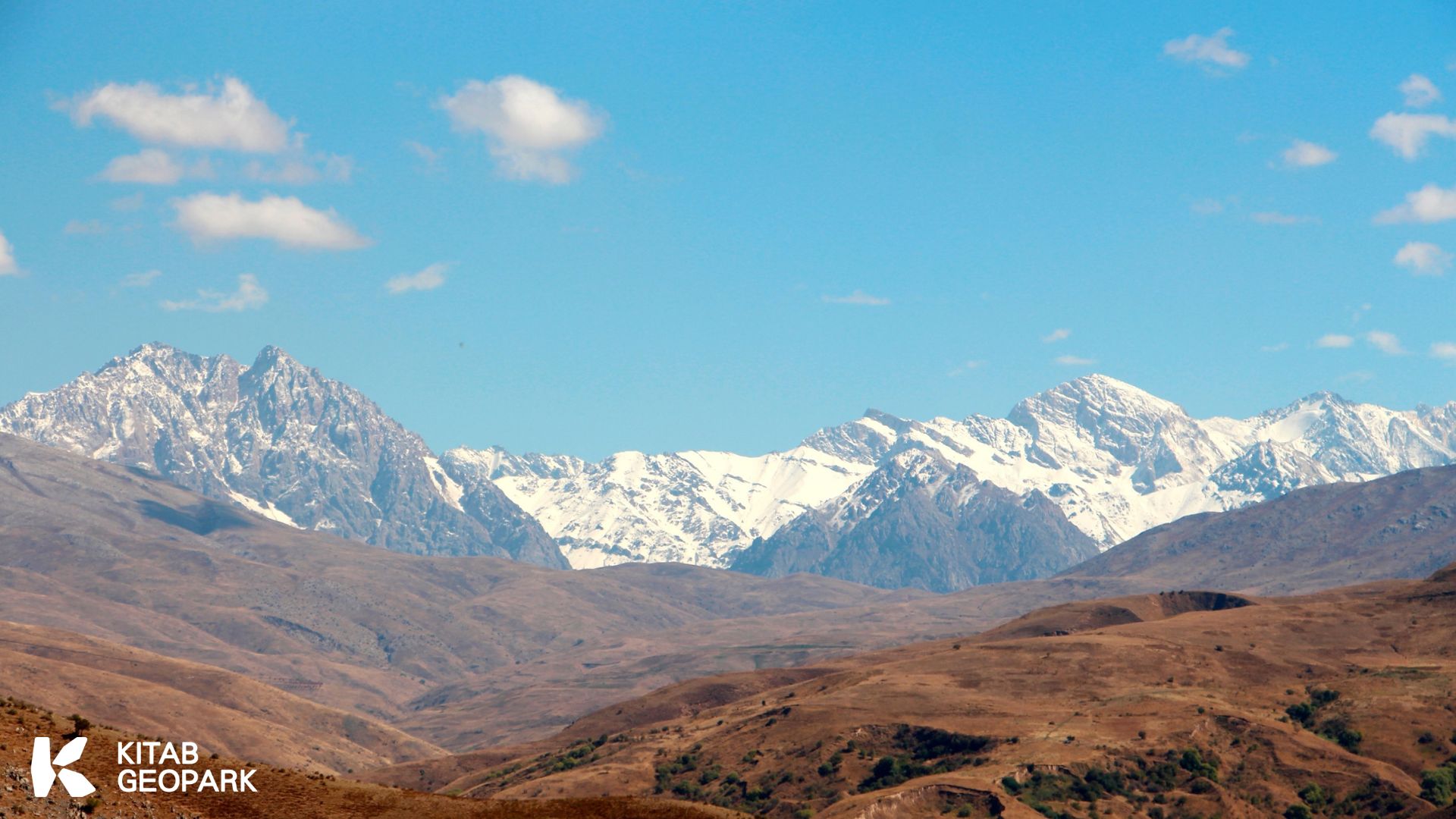
The Kitab Geological National Natural Park (formerly the Kitab State Geological Reserve) is administratively located in the Kitab District of the Kashkadarya Region (near the village of Javuz), on the southeastern/western part of the Zarafshan-Hissar (Zarafshan) Ridge, on the left bank of the Jinnidarya River. The total area is 3,938 hectares.
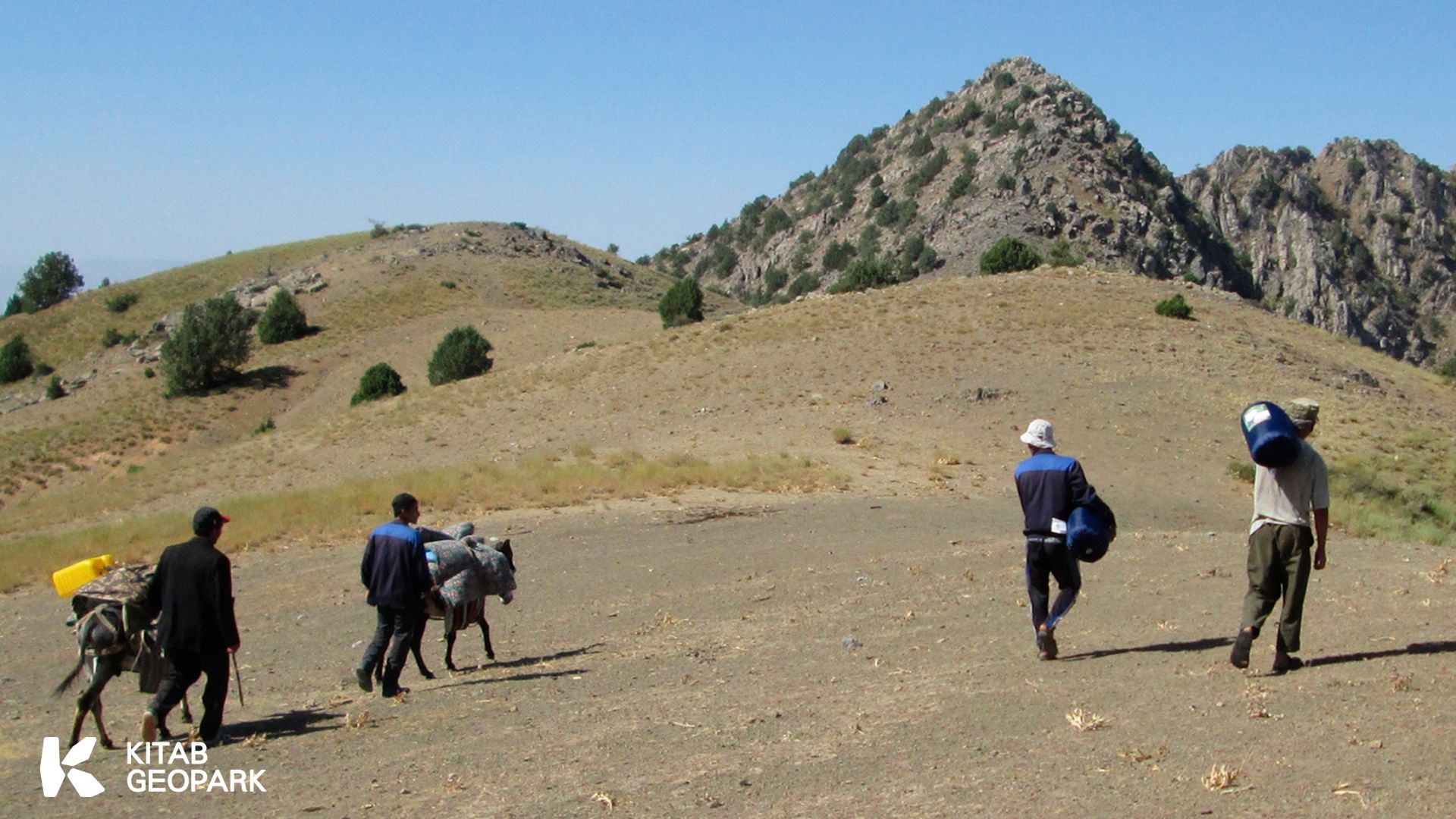
The relief and nature are mountainous, with rocky upper slopes and hilly lower terrain. The elevation above sea level ranges from 1,300 to 2,700 meters. Rivers such as Obi-Safit, Khojaqurgan, Zinzilbog (Zinzilbon), Novabog (Novobak), and others cut deeply through the area, creating picturesque mountain gorges.
History of Establishment and Main Objectives
The scientific exploration of the area began in 1957 by A.I. Kim and a group of specialists. They conducted geological and biostratigraphic observations, determined the age of the rocks, and compiled a geological map. The reserve was established in the basin of the Khojaqurgan and Zinzilbog rivers by Resolution No. 206 of the Government of the Republic of Uzbekistan on March 22, 1979.
The primary objectives of its establishment are to develop the standard for the Central Asian stratigraphic scheme of Devonian sections and the International Devonian measurement unit, to protect unique geological, stratigraphic, and paleontological objects of the territory (Zinzilbon, Khojaqurgan, Novobak, Kule, Shahriomon, Gorlisoy, and Obisafed sections), and to conduct systematic scientific research.
Modern Status and Tasks
In accordance with Resolution No. PQ-4766 of the President of the Republic of Uzbekistan dated June 30, 2020, and Resolution No. 534 of the Cabinet of Ministers dated September 2, 2020, the institution was reorganized into the " Kitab Geological National Natural Park".
Main Tasks:
- Ensuring the preservation of biological and landscape diversity within the system of specially protected natural areas (ecological network), contributing to ecological balance;
- Ensuring the rational and sustainable use of natural objects and complexes for recreational, scientific, and cultural purposes;
- Conducting environmental monitoring of the natural environment.
- The strategic goal is to develop geotourism and become the first member of the UNESCO Global Geoparks network in Central Asia.